
Why Manual SEO Audit Without using a Tool?
While tools can crawl links, fetch data, and help you spot errors, there are some aspects where human intervention is still needed.
An audit is not just about looking for technical glitches. It is also about understanding what’s missing from a human perspective, from the marketing side, and when it comes to the brand message.
You need to have a solid understanding of what you want to achieve through a page and who you want to reach. Machines can help you meet technical parameters and benchmarks, but they can miss important aspects of content and user intent.
An audit should be like an open conversation that can be easily understood and communicated to the client, not like a medical report.
This blog is for freelancers and beginners who want to pitch clients with an SEO audit. It is also useful because these are basic mistakes that many websites continue to have when they rely on third-party agencies that treat every website the same way. And that’s something that shouldn’t happen.
Every website is unique. Its vision, mission, and objectives are different. So, to create a tailored and personalized pitch, especially when you are at the stage of pitching SEO as a service, a manual audit can look more professional and, more importantly, be easier for the client to understand.
FIRST- Check the Metadata in Your SEO AUDIT
Home and About pages are important pages of any website. One gives an overview of the website, while the other talks about the vision and mission behind it.
Check the content on these pages.
Check the metadata of these pages.
Then check whether what’s written on the pages is reflected in the metadata too.
No tool is needed. Use ‘Ctrl + U’ on your keyboard to see page source code of the page.
Meta titles and meta descriptions help search engines understand what a page is about and can influence how the page is represented in search results.
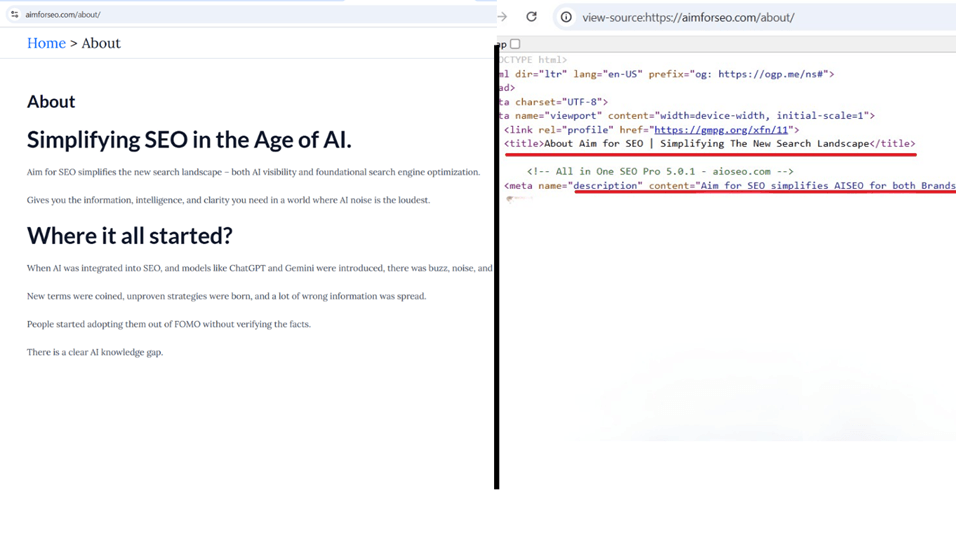
So, you cannot neglect them.
Next – Check the URL in Google Search
Take any URL from a website — a page or a blog post.
Go to Google Search and type:
`site:example.com/xyz’ – (this is page url)
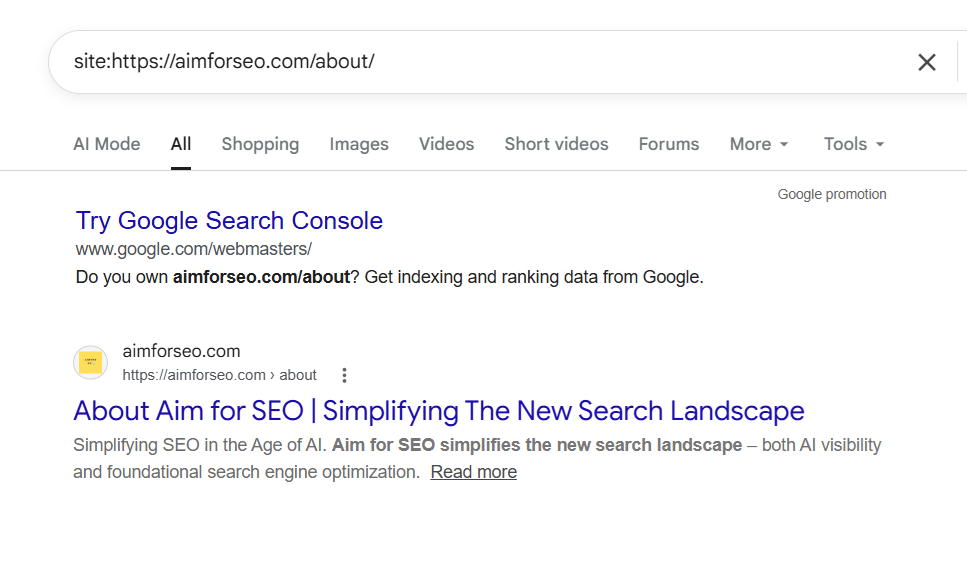
If the page appears, it is a strong indication that Google has indexed it.
However, if you don’t see the page, that does not always mean it is not indexed. Google may simply not return that specific page for the search query.
This is still a useful manual check when auditing a website.
There are several reasons why important pages may not be appearing in search results. This can happen with websites that outsource their design, development, and content work to agencies.
Three common things are:
- An XML sitemap may not have been created or properly submitted.
- Pages may be blocked from indexing using a `noindex` directive.
- Pages may have thin, low-quality, or unhelpful content, which can affect their ability to perform well in search.
You have to take responsibility for monitoring these basic issues.
LOOK FOR – Generic Metadata across pages
Generic or incorrect metadata can make it harder for your pages to appear for the right search queries and attract the right audience.
Let’s understand this with an example.
Assume you have used the same meta title across all the pages of your website i.e. “Best AISEO Learning Website“
Home page meta title is: Best AISEO Learning Website
Blog post meta title is also: Best AISEO Learning Website
But the blog post is actually covering the topic: Old Search vs AI-Powered Search
The content is relevant, useful, and good.
But what’s the use of having a generic or inaccurate meta title?
Got it?
People who are genuinely searching for “old search vs AI-powered search” may be less likely to click your blog if the search result doesn’t clearly communicate what the page is about.
Because you used the wrong meta title.
What you write in the metadata helps search engines understand the page and can influence how it is represented in search results.
It simply means you may be making it harder for your own audience to find and choose your content because the search intent is not clearly reflected in your metadata.
Metadata is one of the first things people see in a search result, and it can influence whether they decide to click on your website or not.
So, even when your pages are indexed, poor or generic metadata can affect how effectively they appear and attract clicks for relevant searches.
This is how you can manually identify some of the basic and most important factors that can affect a page’s search visibility – without using any SEO tool.