
Why write for the intent, not for keyword?
Because we are not typing just keywords anymore. We started typing questions.
We are not looking for information. We are looking for answers.
AI has revolutionized the search behavior. It eliminated the mundane task of going through multiple sources and picking an answer.
AI is recommending what exactly people need.
AI overviews and AI citations are classic examples.
AI is bringing people directly to the bottom of the funnel – where conversions happen.
Should I ignore keyword?
The quick answer is – No.
Even in AI age, you will still need a keyword, because it gives you the context.
Think of it as a head keyword that tells you what people are talking about, which trends are evolving, and what is in demand.
Without keyword, there is no clue.
Then the very next step is identifying what exactly are people looking for within the keyword – Intent.
Think of it as a long-tail keyword which has a purpose.
So, you shouldn’t ignore keywords.
What is an Intent?
In SEO context, let’s think of intent as – an underlying purpose for knowing something.
It is not subjected to just one factor.
It can be an expectation, pain point, or even an emotion (happiness, sadness, fear, anger and more).
Examples of Intent behind a keyword:
Keyword – SEO JOB
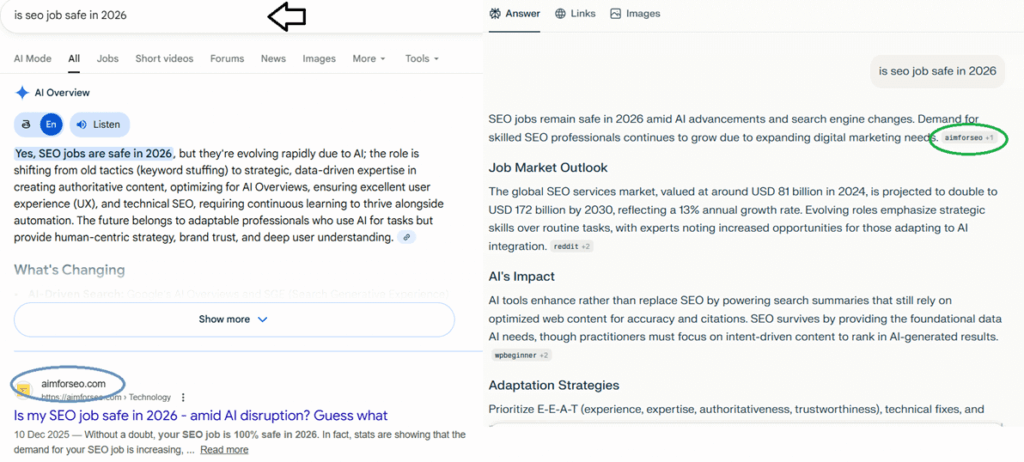
Intent 1 – Is my SEO job safe in 2026 despite AI disruption? (fear)
Intent 2 – Why SEO jobs are at risk in AI age? (pain point)
Intent 3 – What’s the projection of future global SEO job market? (expectation)
How to Know the Intent behind a keyword?

You can figure out the intent behind a keyword by participating in real conversations, and by looking at real discussions.
You see them happening on authoritative platforms and online communities.
You take a keyword and search it on platforms like Quora and Reddit. You will see lot of threads related to your topic.
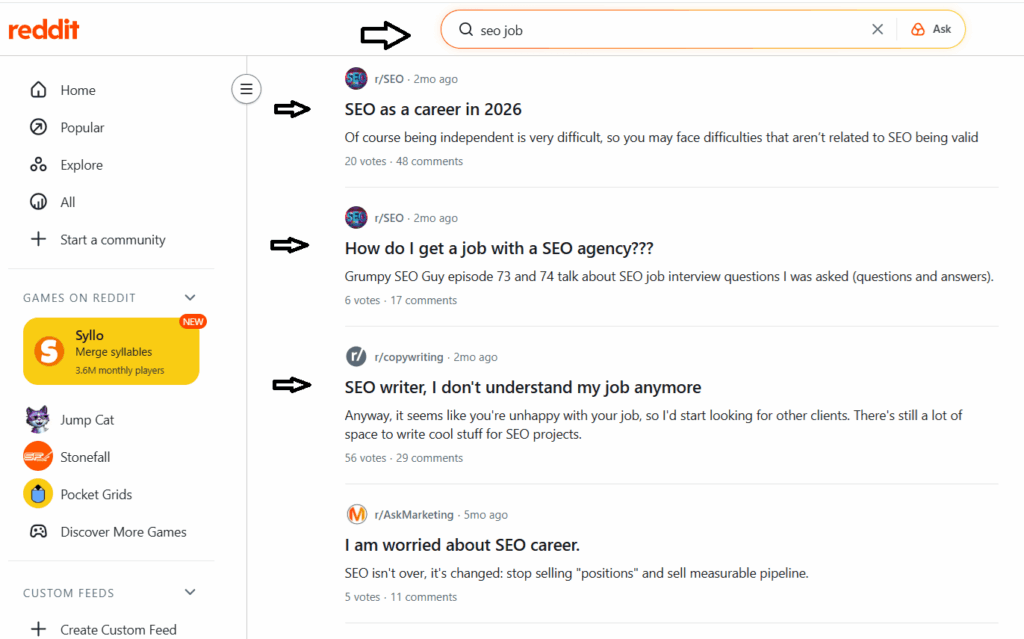
People express their feelings and concerns deeply on these platforms, because they have freedom to do it in anonymity.
Pick one intent and write for one user so it gets super personalized.
Your content is more likely to show up in search results and further in AI visibility as well.
Why Intent works better than a Keyword?
Anybody can offer general content.
But specificity adds more value because it addresses a specific problem.
It is more personalized and tailored to a need.
So, writing for an intent works way better than writing for a keyword in the age of AI.
What led to this new shift – search behavior?
It happened with the intervention of AI.
Models like ChatGPT are fine-tuned for conversational assistance.
People liked the way it answered, and comprehended complex queries within seconds.
People started asking long questions, and deep questions.
That’s how the search behavior has changed.
Other platforms also integrated AI into their platforms following the trend.
Example:-
Google introduced an advanced search feature called – AI Overview which can comprehend lengthy questions and give direct answers.
Understand it fully in SEO Strategy for AI Age.