Where it all started?
It all started when OpenAI introduced ChatGPT.
ChatGPT changed the way we search and the way we seek information.
With instant answers, it offered a completely new search experience.
Soon after, Google introduced Gemini, its LLM known for multi-modality and the ability to comprehend complex queries.
Alongside this, Google also introduced a new search feature called AI Overview, which changed the traditional Google search interface.
Across these platforms, one thing became common: AI summarizes information and provides direct answers instantly, without users having to scroll through results or open multiple links.
The Shift: Information to Answers
AI has shifted the way people interact with information.
Earlier, users had to open multiple links, read through them, and verify the information before arriving at a conclusion. Now, AI performs much of that work on behalf of the user.
It analyzes information from various sources, summarizes it, and delivers a direct answer. What used to take several clicks and comparisons can now happen in a single prompt.
Across AI platforms such as ChatGPT, Perplexity, Gemini, and Meta’s AI tools, the experience is becoming similar: users ask a question and receive a precise, synthesized answer instantly.
AI Citations: The Emerged Opportunity
Across platforms, AI not only provides answers but also points back to the original web pages from which the information is sourced.
These references, often shown as citations or links, help users verify the information and explore the source further.
Because of this, AI crediting original sources has emerged as a new opportunity for websites to secure visibility. When AI includes a page as a reference, it creates a chance for that page to gain attention and traffic from users seeking deeper information.
Misunderstanding to Realization
At first, many brands assumed there was a direct way to optimize for AI, similar to how websites use a robots.txt file for search engines. Ideas like creating an LLMs.txt file or tracking competitors visibility across LLM platforms started gaining attention.
However, it did not take long to realize something important.
AI citations and AI overviews are largely reflections of already indexed web pages. They exist to show the references behind the answers AI provides.
In other words, AI is curating information from webpages that already demonstrate clear structure, topical authority, and relevance.
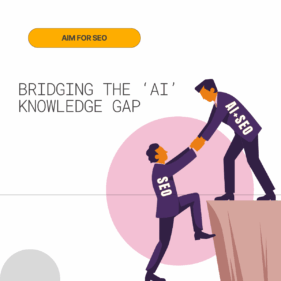
The realization was simple: good SEO naturally leads to good AI visibility.
Lesson Learned
AI seeks information from webpages, but not from duplicate content, plagiarism, or AI-generated content that lacks a clear perspective. AI systems are capable of identifying and filtering such content.
What AI looks for is original, meaningful information that adds value.
So the lesson is simple and straight: SEO in the Age of AI is about delivering something real and delivering something original.



Pingback: How to Navigate SEO in 2025 - The Age of AI and Uncertainty
Pingback: 3 Types of SEO for Substantial Growth | Your SEO begins here