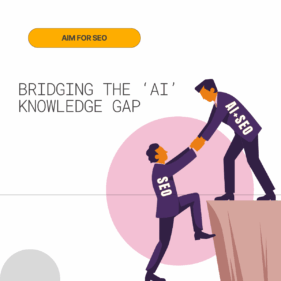
SEO isn’t disappearing. Search is evolving. And understanding how search works is becoming more valuable than chasing rankings.
Search is changing. But not in the way most people think.
Open LinkedIn or YouTube, and you’ll quickly find someone saying:
- SEO is dead.
- AI has replaced Google.
- You need GEO instead of SEO.
- Keywords no longer matter.
It’s easy to believe these claims because search has changed dramatically over the last two years.
Today, people search on Google, ChatGPT, Gemini, Perplexity, Claude, and even social media.
Sometimes they get a list of links.
Sometimes they get a complete answer without clicking a website.
Naturally, people wonder:
Does SEO still matter?
The answer is yes.
But before we talk about SEO, we need to understand something much bigger.
We need to understand search.
SEO was never the goal.
Finding information was.
Imagine you wanted to buy a phone twenty years ago.
You visited different websites.
Compared specifications.
Read reviews.
Watched YouTube videos.
Asked friends.
Eventually you made a decision.
Today, you ask ChatGPT.
Or Gemini.
Within seconds, AI summarizes information from multiple sources.
The goal hasn’t changed.
You’re still trying to find information.
Only the way you discover it has changed.
That’s why this isn’t really a story about SEO.
It’s a story about how humans find information.
Search has evolved through three generations.
Generation 1: Finding webpages
Early search engines worked like giant libraries.
They searched for webpages containing the words you typed.
If you searched for
best running shoes
Google mainly looked for pages containing those exact words.
Matching keywords played a huge role.
Generation 2: Understanding meaning
Search engines became smarter.
Instead of matching words, they started understanding what people actually meant.
Someone searching
shoes for marathon beginners
might receive pages about
running shoes for first-time marathon runners
even if the wording was different.
Google had learned that meaning matters more than exact wording.
This was the beginning of semantic search.
Generation 3: AI answers
Today, AI doesn’t simply point you toward information.
It often combines information from multiple sources and gives you a direct answer.
Instead of asking
Which laptop should I buy?
you might ask
I’m a graphic designer with a budget of $1,500. Which laptop would you recommend and why?
This isn’t a keyword.
It’s a conversation.
Search has become much closer to how humans naturally ask questions.
If AI answers questions, why do websites still matter?
This is one of the biggest misunderstandings about AI Search.
Many people think ChatGPT already knows everything.
It doesn’t.
When information needs to be accurate, current, or specific, AI systems often retrieve information from the web before generating an answer.
Think of AI like a researcher.
Before answering your question, it quickly looks at trusted sources, compares them, identifies patterns, and then explains the result in simple language.
Without quality websites, there would be nothing reliable to retrieve.
AI doesn’t replace websites.
It depends on them.
So where does SEO fit into all of this?
SEO has always been about helping search engines understand your website.
Today, that purpose hasn’t changed.
What has changed is who needs to understand your content.
Years ago, you mainly optimized for Google.
Now your content may be interpreted by:
- Google Search
- Google AI Overviews
- ChatGPT Search
- Gemini
- Perplexity
- Other AI-powered search systems
Each system may present information differently, but they all rely on one thing:
They need to understand what your content is about.
That’s why SEO fundamentals remain important.
Clear structure.
Helpful content.
Logical organization.
Strong topical coverage.
Trustworthy information.
These aren’t old SEO practices.
They’re communication practices.
Rankings aren’t the real objective anymore.
Understanding is.
Many businesses still ask,
“How do I rank number one?”
It’s a fair question.
But here’s a better one:
Can both humans and AI clearly understand what my business does?
Imagine you own a company that specializes in cybersecurity for hospitals.
If every page consistently explains your expertise, uses clear language, demonstrates experience, and connects related topics together, you’re helping both people and AI understand your business.
That’s far more valuable than repeating the phrase
healthcare cybersecurity
twenty times.
Modern search rewards clarity more than repetition.
The websites that will succeed are the ones that teach.
Think about the websites you trust.
They’re rarely the ones trying hardest to rank.
They’re the ones helping you understand something.
They explain.
They educate.
They simplify.
Whether someone discovers your content through Google or ChatGPT, the experience should feel the same:
“I finally understand this.”
That’s what people remember.
And increasingly, that’s what AI systems recognize too.
SEO is becoming part of something much bigger.
For years, SEO was mostly about optimizing webpages.
Today it’s becoming part of a much broader ecosystem involving:
- Search engines
- Large Language Models
- Knowledge graphs
- Structured data
- Brand authority
- Information retrieval
- AI-generated answers
Understanding this ecosystem helps you make better decisions.
Instead of reacting to every algorithm update or every new acronym, you begin to understand the principles behind them.
And principles usually last much longer than tactics.
The future belongs to people who understand search.
The conversation shouldn’t be
“Is SEO dead?”
A better conversation is
“How is search evolving?”
Because SEO will continue evolving alongside search.
New interfaces will appear.
New AI models will emerge.
User behavior will change.
But one thing will remain constant:
People will always need trustworthy information.
And search systems – whether they’re search engines or AI assistants, will always need reliable sources to provide that information.
Final Thoughts
If there’s one idea I’d like you to remember, it’s this:
Don’t spend all your time learning how to rank. Spend time understanding how search works.
Rankings change.
Algorithms change.
AI models change.
But when you understand how information is discovered, interpreted, trusted, and recommended, you’re no longer chasing every trend.
You’re building something that can adapt to whatever comes next.
Because in the age of AI, understanding search is becoming more valuable than optimizing for it.